Does Hyrox Compression Gear Actually Help, or Is It Just Marketing?
Quick Answer: Compression gear has modest, real evidence for reducing muscle oscillation and perceived fatigue during long efforts like Hyrox, and stronger evidence for speeding recovery afterward — but it won’t fix bad pacing or weak stations, so it’s a marginal gain, not a shortcut.
Walk into any Hyrox race and half the field is in knee-high compression socks. Before you buy a set, it’s worth knowing what they actually do.

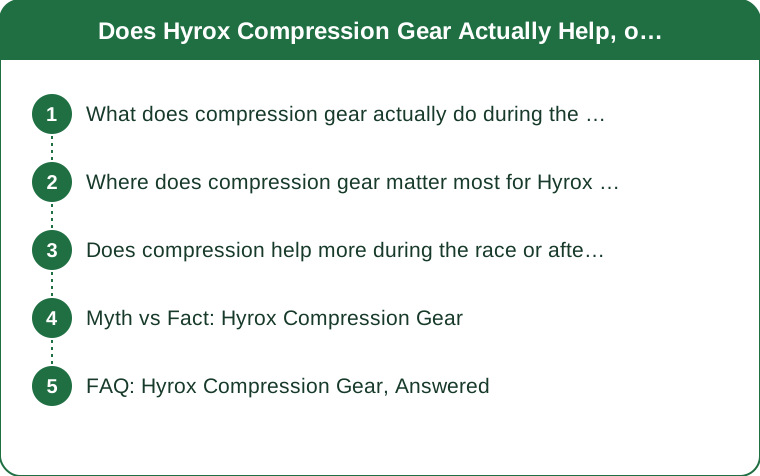
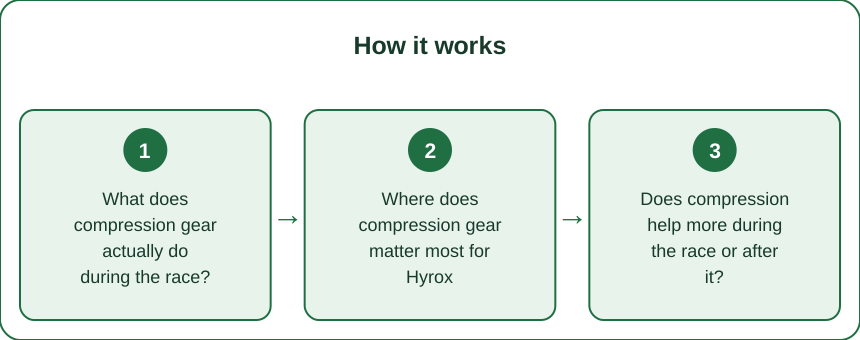
What does compression gear actually do during the race?
Graduated compression reduces muscle vibration during repetitive movement like running, which some athletes report as less leg fatigue over an hour-plus race. The effect is real but modest — studies show a few percent difference in perceived exertion, not a dramatic performance jump.
Where does compression gear matter most for Hyrox specifically?
Calf and lower-leg compression shows the most consistent benefit given how much of Hyrox is running between stations. Compression on stations like the sled push or wall balls shows far less evidence of helping — the movement pattern there doesn’t create the same oscillation problem.

Does compression help more during the race or after it?
Recovery is where the evidence is strongest. Wearing compression gear for a few hours post-race is more consistently linked to reduced soreness and faster perceived recovery than wearing it during the race itself.
Myth vs Fact: Hyrox Compression Gear
Myth: Compression gear will improve your finish time significantly. Fact: The performance effect is small — pacing and station technique matter far more than sock tightness.
Myth: Full-body compression is better than targeted pieces. Fact: Calf sleeves or socks show the clearest benefit for running-heavy events; full-body suits add cost without much additional evidence.
Myth: If it doesn’t feel different, it’s not working. Fact: The muscle-oscillation benefit isn’t something most people consciously feel — it shows up in fatigue markers, not sensation.
FAQ: Hyrox Compression Gear, Answered
Are compression socks worth buying for a first Hyrox race?
They’re a reasonable, low-cost addition, but don’t expect them to compensate for undertrained running or station technique.
Should compression gear be tight or just snug?
Graduated compression (tighter at the ankle, looser higher up) is what the evidence supports — random tightness without a graduated fit doesn’t replicate the studied effect.
Can I wear compression gear for training too, not just race day?
Yes — many athletes find it most useful during high-volume training blocks for recovery, saving race day gear for the psychological boost alone.
TL;DR:
- Compression gear modestly reduces muscle oscillation and perceived fatigue during long efforts
- Calf and lower-leg compression shows the clearest benefit for a running-heavy event like Hyrox
- Recovery benefits are stronger and more consistent than in-race performance benefits
- It’s a marginal gain — pacing and station technique still decide your finish time
Wear it if you like it, but train the sled and the run before you shop for socks.
Keep Reading
This article is for general informational and styling purposes only. Fit, sizing, and product availability may vary.