How to Pace the Rower in a Hyrox Race
Quick Answer: Row the 1000m about 8 to 12 seconds per 500m slower than your fresh 1000m pace, and aim for a negative split - first 500 controlled, second 500 slightly faster. The cost of overpacing here is not the row itself; it is the run immediately after, where a blown row adds far more time than you saved. Drive with the legs, keep the stroke rate around 24 to 28, and stand up slowly.
More races are lost on the rower than won on it.
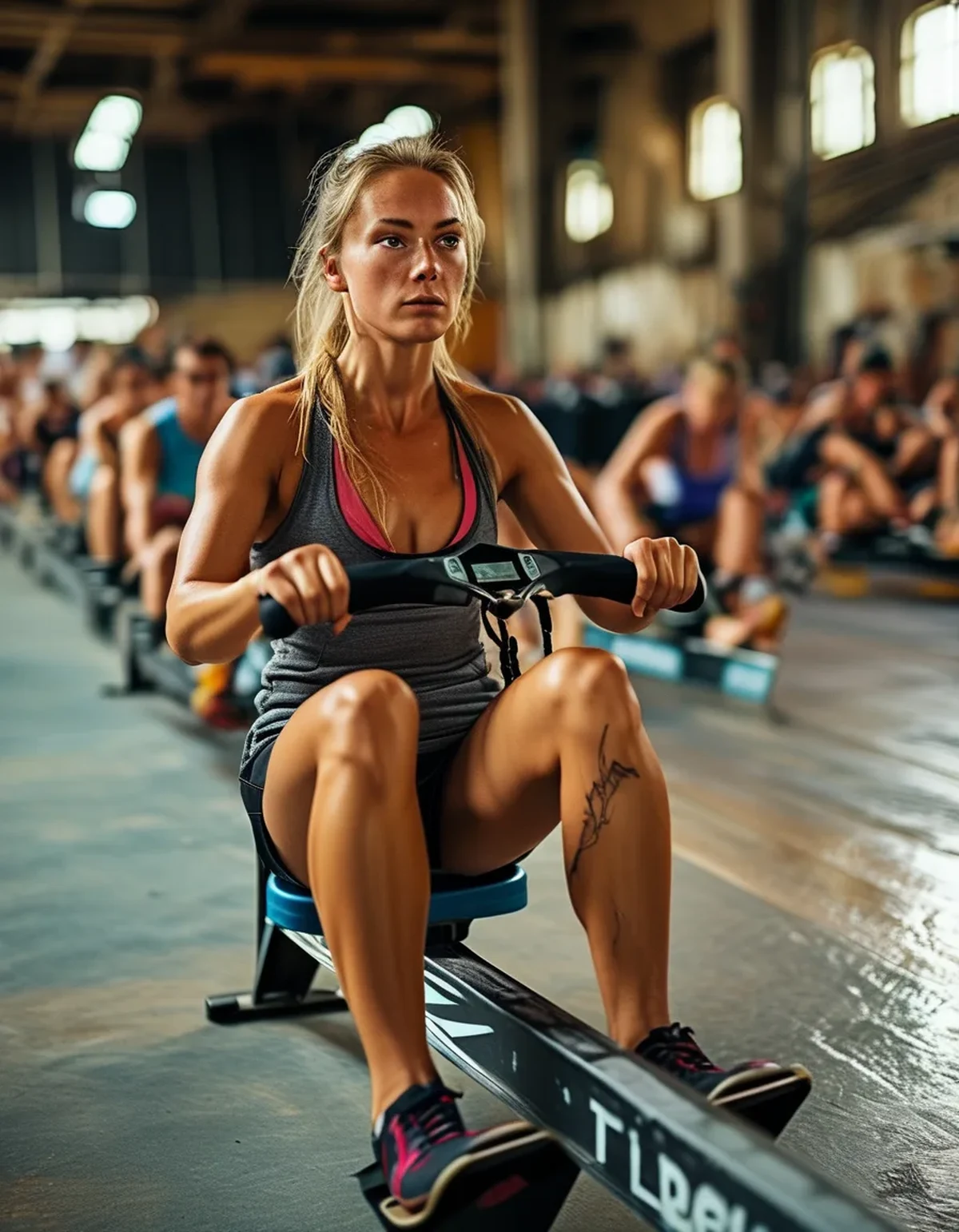
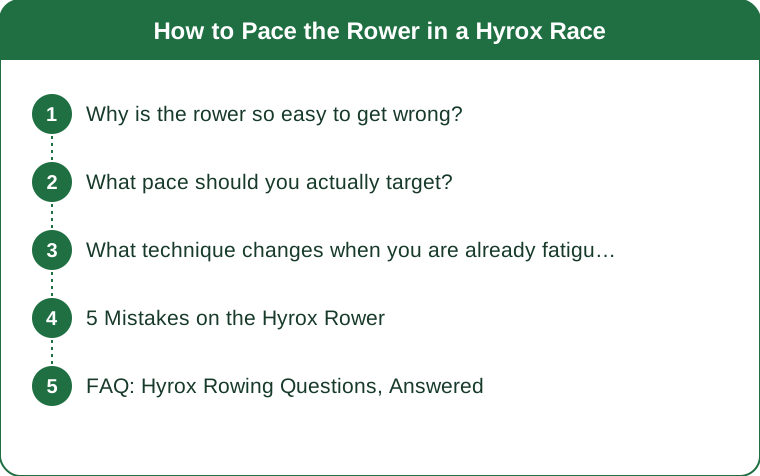
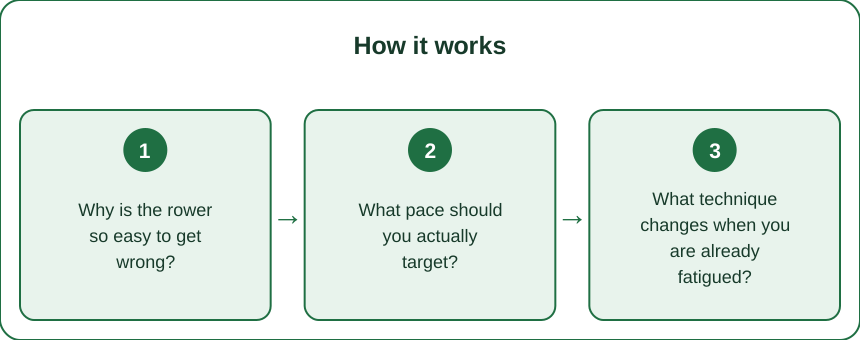
Why is the rower so easy to get wrong?
Because it is the one station where you feel capable of going faster than you should, and the punishment arrives later.
By the time you reach the rower you have completed three runs and three stations, so your legs are fatigued but your arms and lungs feel comparatively fresh. Sitting down is a relief. The screen gives you an immediate, precise number to chase. Everything about the situation invites you to race it.
The problem is what rowing hard does to you. A hard 1000m row is a maximal full-body effort that drives heart rate and blood lactate high, and it does so while you are seated - meaning you get none of the postural adjustment your body would make while running. Then you stand up and immediately run a kilometre.
That transition is where races come apart. Rowing hard leaves the legs heavy in a specific way, standing up after a maximal seated effort frequently produces a wave of lightheadedness, and the first 200 metres of the following run are slower than they have any right to be.
The arithmetic is the important part. Rowing 15 seconds faster and then running 60 to 90 seconds slower is a bad trade, and it is the most common one in the whole race. Slower on the rower is faster overall for most people, which is genuinely hard to believe until you have experienced it both ways.
What pace should you actually target?
Work backwards from a number you already know, rather than from a feeling.
Step 1: establish your fresh 1000m pace. Row a hard 1000m in training, well rested. Note the average split per 500m.
Step 2: add 8 to 12 seconds per 500m. That is your race target. If your fresh split is 2:05, your race split is roughly 2:13 to 2:17. Newer athletes should use the larger adjustment; experienced racers with strong aerobic bases can use the smaller one.
Step 3: plan a negative split. First 500 at the target pace or two seconds slower, second 500 two to three seconds faster. This produces the same total time as an even effort but leaves you in far better shape when you stand up, because you have not spent the whole piece at your ceiling.
Step 4: know your number before the race, and put it on the screen. Set the monitor to show average split, decide your number, and hold it. The single most useful discipline on this station is refusing to look at the person next to you.
Some rough reference points for the 1000m in a race context, understanding that these vary enormously:
- Beginner: 4:30 to 5:15
- Intermediate: 3:50 to 4:30
- Advanced: 3:20 to 3:50
What matters far more than where you sit on that scale is the gap between your fresh pace and your race pace. If your race row is within 3 seconds per 500 of your fresh time trial, you almost certainly rowed too hard and paid for it on the next run.
What technique changes when you are already fatigued?
Three adjustments, all of them about protecting the legs.
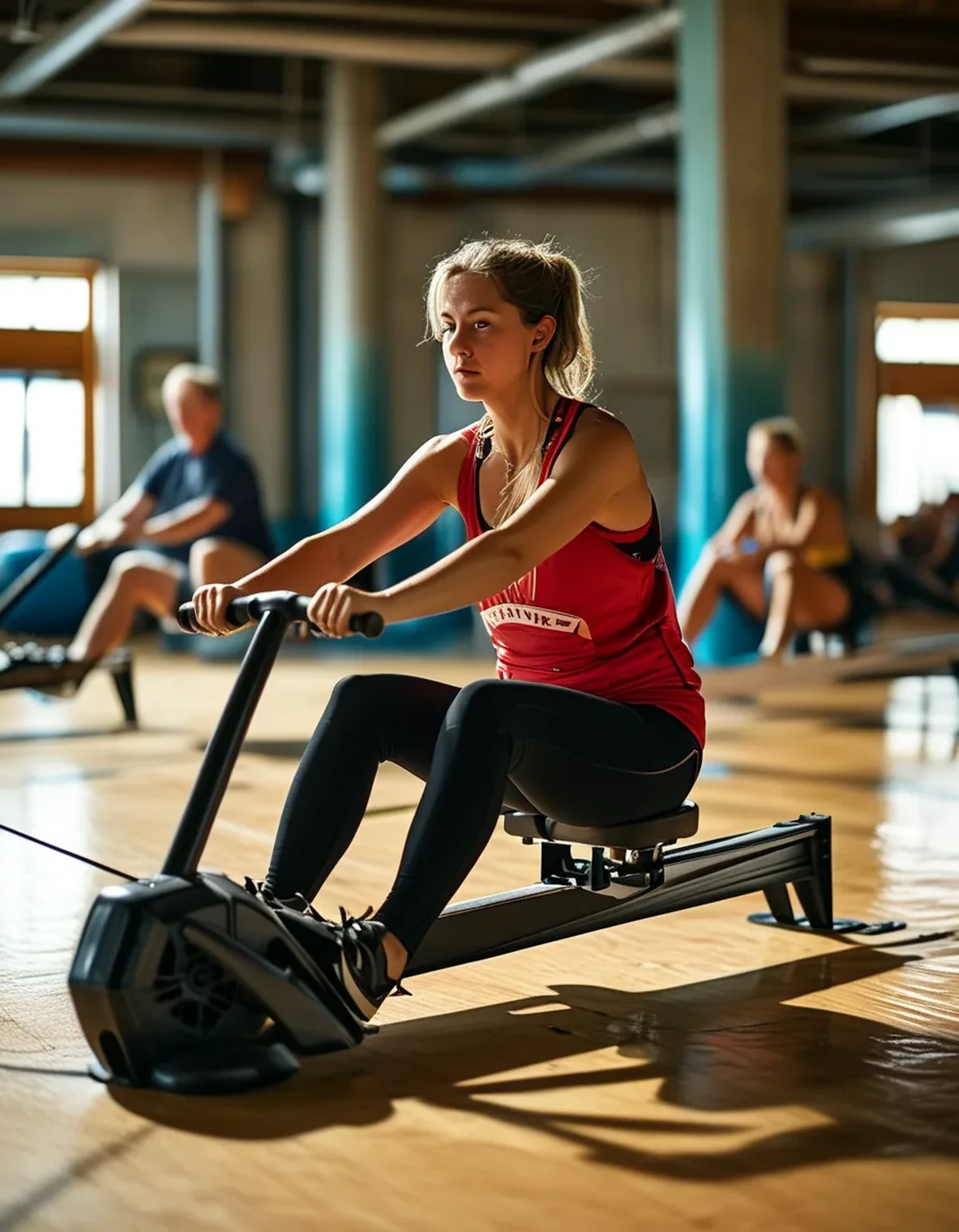
Lower the stroke rate, raise the power per stroke. A rate of 24 to 28 strokes per minute is the useful range in a race. Higher rates feel productive and are metabolically expensive - you spend energy on recovering the handle rather than on moving the flywheel. Slow the recovery, keep the drive strong.
Sequence the drive properly, especially when tired. Legs, then back, then arms. Fatigue makes people pull with the arms early, which produces a weak stroke and burns the exact muscles you would rather keep. If the row feels like an arm exercise, the sequence has collapsed.
Use the damper setting sensibly. Somewhere between 4 and 6 for most people. High damper settings feel powerful and load the legs heavily, which is the last thing you want before a run. Lower settings require higher rates. The middle is the compromise that costs your legs least.
Do not over-compress at the catch. Fatigued athletes tend to slide too far forward, which puts the legs in a weak position and shortens the effective drive. Shins vertical, not past vertical.
One more thing that is technique-adjacent and matters as much as any of it: the last 100 metres. Resist the urge to sprint the finish. The final sprint costs a lot and buys you three or four seconds, and it converts a controlled row into a maximal one at exactly the moment before you have to stand up and run.
5 Mistakes on the Hyrox Rower
1. Racing the person beside you. They may be on a different lap, a different division, or having a bad day. The screen in front of you has your number on it; the person next to you does not.
2. Sprinting the last 100 metres. Buys a handful of seconds and costs a slow first 400 metres of the next run. Finish steady and stand up composed.
3. Standing up too fast. After a hard seated effort, blood pressure regulation lags. Standing abruptly produces the lightheadedness a lot of racers experience here. Take three seconds - unstrap, plant both feet, stand deliberately, walk two steps, then run.
4. Setting the damper too high. It feels stronger and it loads the legs disproportionately. Between 4 and 6 leaves you with legs that can still run.
5. Never practising it fatigued. Rowing 1000m fresh in training tells you almost nothing about rowing it after three runs and three stations. Practise the row immediately after 400m of running and a set of burpees, and the race pace you need will become obvious very quickly.
FAQ: Hyrox Rowing Questions, Answered
Should I use straps or not?
Straps if the machine has them and you can get in and out quickly. The grip savings matter more than the two seconds spent strapping, particularly with sled pushes and farmers carries still to come.
How do I practise the transition out of the rower?
Deliberately, as its own drill. Row 500m hard, unstrap, stand, and run 200m immediately. Do it several times. The transition is a trainable skill and almost nobody trains it.
Is the rower a good place to make up time if I am behind?
Almost never. It is one of the shortest stations by time and one of the most expensive in downstream cost. If you need to make time, the runs and the transitions offer far more.
What if I have never rowed before the race?
Then the pacing advice matters even more, because technique inefficiency raises the cost of every stroke. Row at an effort that feels clearly sustainable, keep the rate low, and prioritise finishing able to run. Learning proper sequencing is the highest-value thing you can do in the weeks beforehand.
TL;DR:
- Add 8 to 12 seconds per 500m to your fresh 1000m split to get your race pace, and negative split it.
- The cost of overpacing shows up on the run afterward, not on the rower - rowing 15 seconds faster to run 90 seconds slower is the classic error.
- Rate 24 to 28, damper 4 to 6, legs-back-arms sequence. Fatigue makes people pull with the arms first.
- Do not sprint the last 100 metres and do not stand up quickly. Unstrap, plant, stand, walk two steps, then run.
- Practise the row fatigued and practise the transition out of it. Fresh 1000m times tell you very little.
Decide your split before race day and hold it. The rower is a station to survive, not to win.
Keep Reading
This article is for general informational and styling purposes only. Fit, sizing, and product availability may vary.