Running Shoes or Training Shoes for Hyrox? The Real Answer Isn't Either
Quick Answer: Pure running shoes (soft, cushioned, built for forward motion) and pure training shoes (flat, stable, built for lifting) each fall short for Hyrox’s mixed demands — a hybrid or ‘trainer-runner’ shoe with moderate cushioning and reasonable lateral stability is the more practical single choice for most competitors.
You trained your running in max-cushion running shoes and your sled pushes in flat training shoes, and race day forces you to pick just one. That tension is real, and understanding the actual tradeoff helps you choose better than just grabbing whichever shoe feels most familiar.
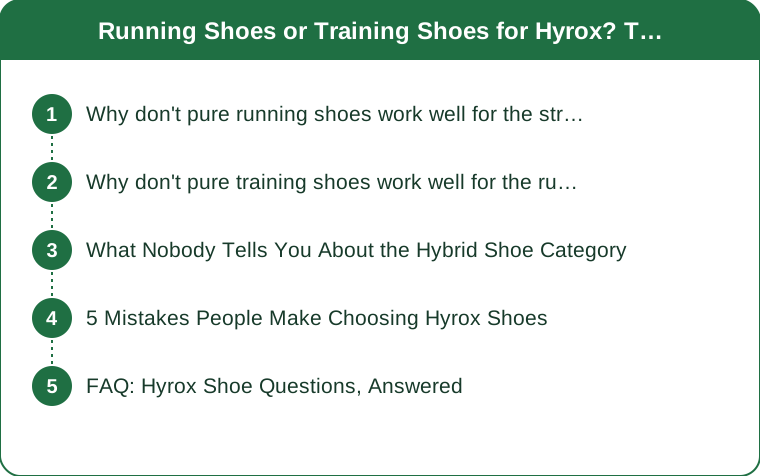
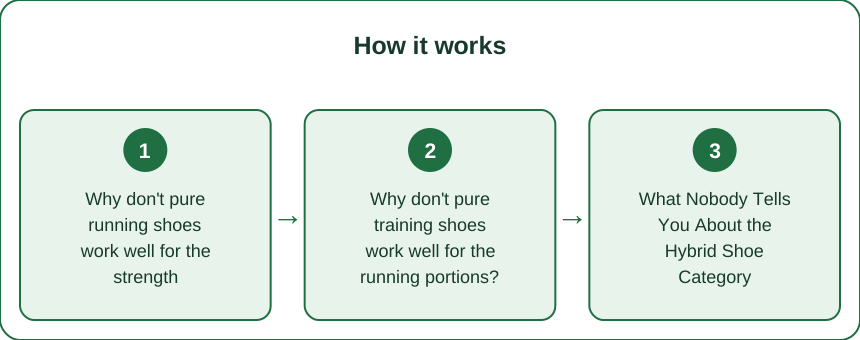
Why don’t pure running shoes work well for the strength stations?
Running shoes prioritize soft, compressible cushioning for repeated forward heel-to-toe impact, but that same softness creates instability during sled pushes, lunges, and wall balls, where a firmer, more stable base transmits force more efficiently and reduces ankle roll risk. The cushioning that helps your knees on the run can work against you the moment you need a firm, stable platform to push or lift from.
Soft-soled running shoes can also compress unevenly under a loaded sled push, making the movement feel less controlled and more fatiguing on stabilizer muscles than it needs to be.
Why don’t pure training shoes work well for the running portions?
Flat, minimal-cushion training shoes (built for squats and lifts) offer excellent stability but very little impact absorption, meaning the repeated running segments in Hyrox — 8 x 1km — can feel noticeably harsher on joints over the race’s cumulative distance compared to a shoe with some running-appropriate cushioning. For a single heavy lifting session this tradeoff makes sense; across 8km of running woven through a race, it adds up.
This is why competitors who train exclusively in flat training shoes sometimes report unusually sore feet and shins specifically after longer Hyrox-style combined sessions, compared to their normal lifting-only workouts.

What Nobody Tells You About the Hybrid Shoe Category
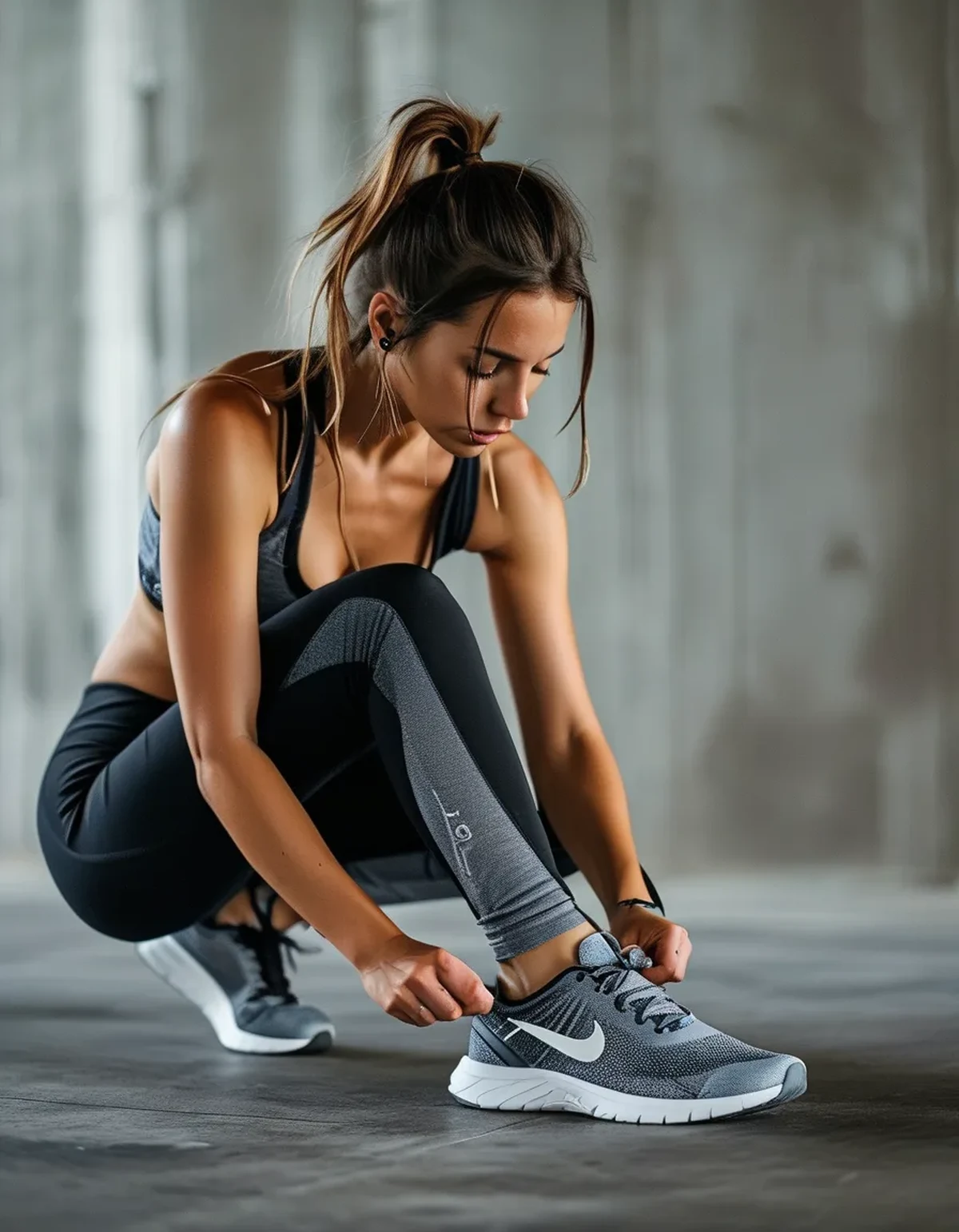
A growing category of ‘hybrid’ or ‘trainer-runner’ shoes, built specifically for functional fitness competitions like Hyrox and CrossFit, aim to split the difference — moderate cushioning for the running legs, a firmer, more stable base and better lateral support for the strength stations. These aren’t a perfect match for either pure discipline, but for a race that combines both in one event, ‘good enough at both’ beats ‘excellent at one, poor at the other.’
Some experienced competitors do carry a shoe change for very specific station types in training (not typically in an actual race, since transitions matter for time), but for most people, especially those newer to the sport, one well-chosen hybrid shoe for the whole race is the simpler and more practical approach.
5 Mistakes People Make Choosing Hyrox Shoes
1. Racing in max-cushion running shoes because that’s what feels familiar from regular running training.
2. Racing in flat weightlifting shoes, underestimating how much the 8km of running will hurt by the end.
3. Buying race shoes without ever training in them, discovering fit or performance issues on race day.
4. Ignoring lateral stability when the race includes lunges and sled work, not just straight-line running.
5. Overthinking the choice instead of just picking a reasonable hybrid option and training consistently in it.
FAQ: Hyrox Shoe Questions, Answered
Is it worth buying a Hyrox-specific shoe, or can a general cross-training shoe work?
A general, well-reviewed cross-training shoe with moderate cushioning can work fine — the ‘Hyrox-specific’ label mostly indicates the same hybrid design philosophy, not a strictly required category.
Should I train in the exact shoes I plan to race in?
Yes — training in race-day shoes for at least several weeks beforehand helps you identify any fit or performance issues before it matters.
Do elite Hyrox competitors use hybrid shoes too, or something more specialized?
Many elite competitors do use hybrid or trainer-runner shoes, though some make individualized choices based on their specific station strengths and weaknesses.
TL;DR:
- Pure running shoes’ softness works against stability needed for sled pushes and lunges
- Pure training shoes’ minimal cushioning adds up painfully across 8km of race running
- Hybrid ‘trainer-runner’ shoes split the difference and suit most competitors better
- Train in your actual race-day shoes for weeks beforehand rather than testing them cold on race day.
Keep Reading
This article is for general informational and styling purposes only. Fit, sizing, and product availability may vary.