The Hyrox Sled Push and Pull Technique Most Beginners Get Backwards
Sled stations wreck more first-time Hyrox racers than any other part of the course, and it’s rarely a fitness problem. It’s a body-angle problem: most beginners push and pull with a posture that turns a manageable weight into a brutal grind.

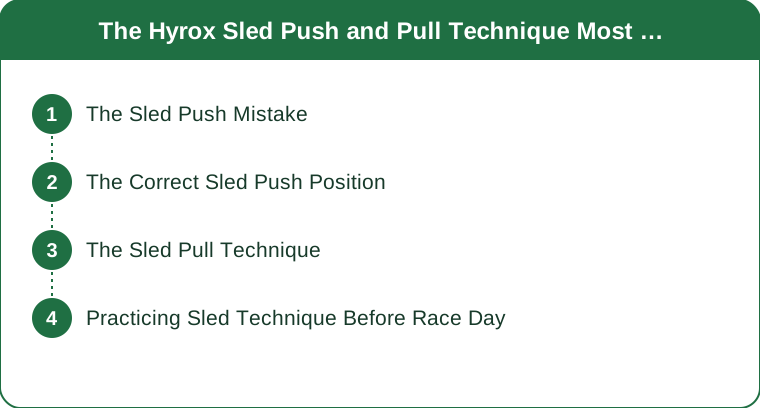
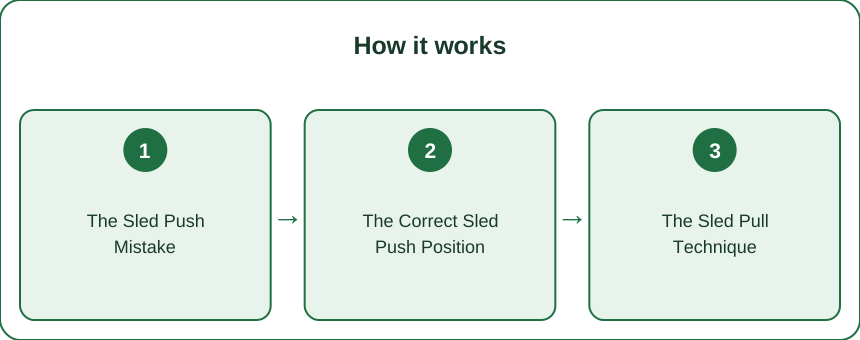
The Sled Push Mistake
The common error: the the-upright-posture-error (standing too tall while pushing, which puts the load through the lower back and arms instead of the legs, the exact opposite of how the movement should feel), the the-arm-locking-mistake (locking the elbows and pushing primarily with the arms, which fatigues quickly compared to driving through the legs and hips), the the-short-choppy-steps (beginners taking short, high-cadence steps that waste energy rather than long, driving steps that cover ground efficiently).
The Correct Sled Push Position
The fix: the the-forward-lean-angle (leaning the torso forward at roughly forty-five degrees, which shifts the load into the legs and glutes rather than the arms and lower back), the the-arm-bend-and-brace (keeping a slight bend in the elbows and bracing through the core rather than locking out, which protects the shoulders over repeated pushes), the the-long-stride-drive (taking longer, deliberate strides that drive through the whole foot, covering more distance per unit of energy spent).

The Sled Pull Technique
The pull-specific fix: the the-rope-hand-over-hand (using a steady hand-over-hand pulling rhythm rather than yanking, which keeps the sled moving smoothly instead of stalling and restarting), the the-low-body-position (sitting the hips back and staying low during the pull, similar to a deadlift position, rather than pulling from a standing height that overloads the arms), the the-foot-bracing (planting feet firmly with each pull rather than sliding, since sliding wastes the force generated by the arms and back).
Practicing Sled Technique Before Race Day
The training approach: the the-light-weight-technique-drills (practicing the forward lean and stride pattern with lighter weight before adding race-level load, since technique breaks down fastest under heavy resistance), the the-video-self-check (filming a few pushes and pulls from the side to check torso angle, which is hard to feel accurately in the moment), and the frame (Hyrox sled stations punish upright posture and arm-dominant effort — leaning into the push and staying low on the pull turns the same weight into a manageable, leg-driven movement.)
The sled stations at Hyrox aren’t harder because of the weight itself, they’re harder because most beginners fight their own posture the entire time. Standing too upright on the push routes the load through the arms and lower back instead of the legs, and pulling from a standing height on the pull does the same thing in reverse. The fix in both cases is body angle: leaning into the push at roughly forty-five degrees, and sitting low into a deadlift-like position on the pull, redirect the effort into the legs and hips where it belongs and where the body actually has the capacity to sustain it. This is a technique problem, not a fitness problem, which means it’s fixable in a single training session with lighter weight and a side-angle video check. Getting the lean and the low pull position right before race day turns the two most dreaded stations on the course into two of the more manageable ones.
Keep Reading
This article is for general informational and styling purposes only. Fit, sizing, and product availability may vary.