Training for Your First HYROX: The 12-Week Build
HYROX’s format is public — eight 1K runs alternating with eight fixed stations — which makes it the rare race you can train for with total specificity. The 12-week first-timer build: the demands, the weekly structure and the rehearsals that decide race day.

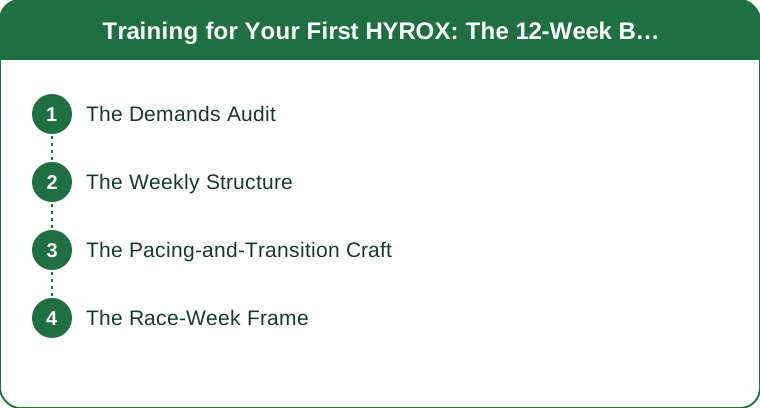
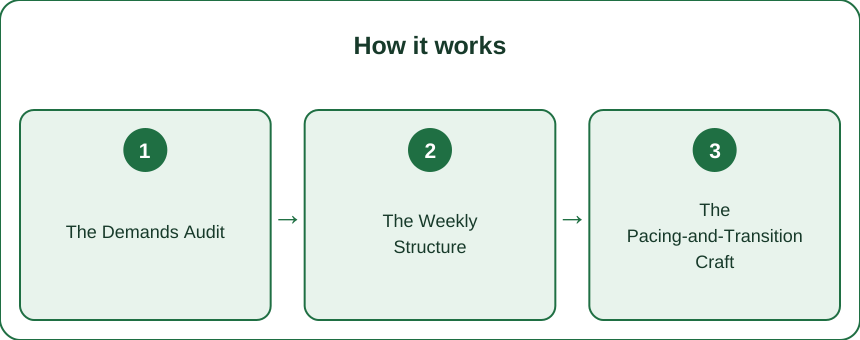
The Demands Audit
What the race actually asks: the running spine (8K of total running in broken 1Ks — the race is half run; the runners enter with an advantage and the lifters with homework), the strength-endurance stations (the sled push-pull, the lunges, the wall balls — not max strength but strength REPEATED under fatigue; the high-rep tier from the strength-endurance world), the compromised-running skill (the race’s signature challenge — running ON tired legs after each station; the skill that neither pure running nor pure lifting trains), and the honest self-assessment (the current 5K time and the sled-and-carry comfort audit — the weaker half of your profile gets the training emphasis; the plan below assumes the general-fitness base from the beginner chapter).
The Weekly Structure
The 12-week template: the run days (two-three weekly — one easy-long, one interval session working toward repeat-1Ks at target race pace; the running base built per the c25k-and-beyond logic), the station-strength days (two weekly — the sled work, farmer carries, lunges, wall balls and rowing trained in circuits; the gym’s functional corner or the HYROX-affiliate classes), the compromised-run brick sessions (the weekly signature workout — station work immediately into a 1K run, repeated; the brick doctrine from triathlon applied; this session IS hyrox training), the recovery architecture (one full rest day, one easy-movement day — the deload week at weeks 4 and 8; the volume that builds must also absorb), and the taper (the final ten days at reduced volume — the race entered fresh per the race-week doctrine).

The Pacing-and-Transition Craft
The race-day skills: the pacing law (the first 1K run SLOWER than feels right — the race punishes early enthusiasm at station four; the negative-split mindset from the race-pacing chapter), the station strategies (the sled’s low-drive body position, the wall-ball breathing rhythm, the burpee-broad-jump’s steady tempo — each station rehearsed enough to have a plan), the transition habits (the roxzone walked with purpose — the seconds that compound across eight transitions; the water-station plan made in advance), and the doubles option (the pairs format halving the station work — the first-timer’s on-ramp with the team-race energy; the friend recruited per the workout-buddy doctrine).
The Race-Week Frame
Arriving ready: the rehearsal capstone (a half-simulation at week 10 — four stations and four runs at race effort; the confidence deposit that race morning withdraws), the kit-and-logistics tier (the grippy shoes over cushioned racers for sled work, the familiar outfit per the nothing-new rule, the venue timing scouted), the fueling plan (the pre-race meal and the mid-race carb strategy from the fuel-timing chapter — the hour-plus effort that wants fuel), the goal calibration (the first HYROX goal is FINISH with even pacing — the time-goal races come after the data exists), and the identity note (the race built for the hybrid athlete — the runner-lifter who was told to specialize; the finish line that certifies the both-and training philosophy this whole library teaches). Run the spine, brick the signature, pace the first K: the race, built for.
Half the race is running, brick sessions are the signature workout, pace the first K conservatively, finish is the goal. HYROX rewards specific rehearsal — twelve weeks of it arrives ready.
Keep Reading
This article is for general informational and styling purposes only. Fit, sizing, and product availability may vary.