Why Your HYROX Time Falls Apart on the Runs, Not the Stations
Quick Answer: Slow HYROX running splits almost always come from starting too fast on run 1-2 before the stations have taken their toll — burning reserves you need for runs 5-8. Even, controlled pacing from the very first run preserves more total race time than any single fast early split gains.
Your sled push time is solid. Wall balls, respectable. And somehow the 1km runs between stations, the part that should be the ‘easy’ recovery segment, are where the whole race quietly falls apart by round six.

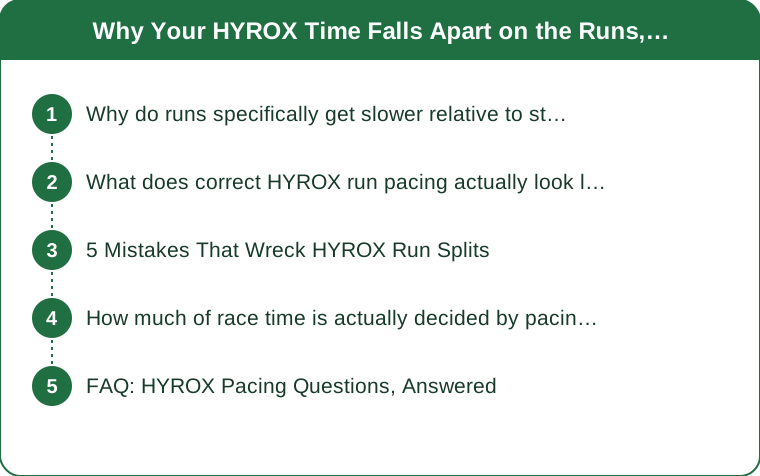
Why do runs specifically get slower relative to stations as the race goes on?
Because running recruits many of the same muscle groups the stations just fatigued — legs, core, grip in some cases — while stations are often more isolated or upper-body-focused. Runs are where accumulated fatigue shows up most visibly, even though they feel like the ‘break’ between hard efforts.
The real issue for most athletes isn’t running fitness at all — it’s pacing the early runs too aggressively, which accelerates the fatigue that later runs then have to fight through.
What does correct HYROX run pacing actually look like?
Even splits, run 1 through run 8, within a tight range — ideally no more than a 10-15% difference between your fastest and slowest run. Most amateur athletes run their first 1-2km noticeably faster than the rest without meaning to, essentially borrowing time they pay back with interest later.
A useful practice target: run your first 1km at a pace that feels ‘too easy’ relative to your fitness. If it doesn’t feel conservative, it’s probably still too fast for an 8-run race.

5 Mistakes That Wreck HYROX Run Splits
1. Racing the field on run 1 instead of racing your own pacing plan — adrenaline makes early fast splits feel deceptively sustainable.
2. Sprinting out of a station transition instead of easing into running pace over the first 100-200m.
3. Not training runs after fatiguing exercises — race-specific prep means practicing running on tired legs, not just running fresh.
4. Ignoring grip and forearm fatigue from stations like farmers carries, which subtly affects running form and cadence more than most athletes expect.
5. No fueling strategy for longer race times — under-fueled athletes see their steepest run slowdown in the race’s second half.
How much of race time is actually decided by pacing versus raw fitness?
A significant share, especially at the amateur and intermediate level. Two athletes with similar station strength and running fitness can finish minutes apart purely based on pacing discipline — even pacing consistently outperforms uneven pacing with a faster peak speed.
This is good news: pacing is trainable and free, unlike raw fitness gains which take months. Fixing pacing alone often produces the fastest finish-time improvement available to an intermediate athlete.
FAQ: HYROX Pacing Questions, Answered
What’s a good pacing strategy for a first HYROX race?
Aim for even splits across all 8 runs, deliberately conservative on runs 1-2 even if it feels too easy — most first-timers who do this finish faster than they expect by protecting the back half.
Should I run faster between easier stations?
No — pace by feel relative to overall race fatigue, not by which station just ended. Consistency across all 8 runs matters more than optimizing any single segment.
How do I train for running on fatigued legs specifically?
Practice runs immediately after a fatiguing strength exercise (like a set of heavy sled pushes or burpees) in training, not just running fresh — this builds the specific fatigue-resistance HYROX racing actually demands.
TL;DR:
- Slow late-race runs are usually caused by pacing too fast in runs 1-2, not weak running fitness
- Target even splits across all 8 runs within a tight range
- Ease into running pace out of transitions instead of sprinting
- Train running on already-fatigued legs, not just fresh runs
Pacing discipline is free and trainable immediately — fixing it is often the fastest way to a better finish time, faster than months of extra running volume.
Keep Reading
This article is for general informational and styling purposes only. Fit, sizing, and product availability may vary.